
Our Microscopes
LS820 Microscope
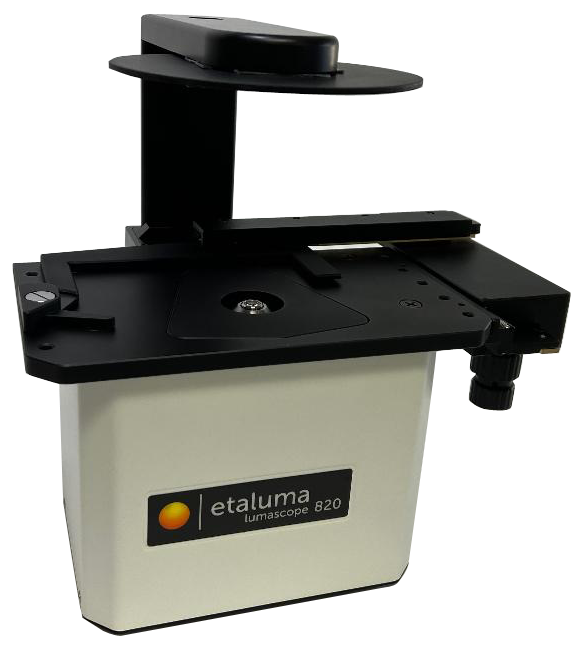
The LS820 offers autofocus and Z-stacks.
Blue, Green,
and Red Fluorescence with Autofocus and Z-Stacking for Time Lapse Automation
The powerful, new LS820 Microscope is the latest generation of our fully automated three-channel motorized Z model and offers the latest advances in optics, camera, and user flexibility. The LS820 provides the image quality, Z-range, illumination, and software flexibility over the manual LS620 model. Motorized focus allows autofocus and z-stacks over 14 mm with 100 nm steps. Easy-to-configure software generating user readable and editable scripts, facilitate your automated microscopy experiments. The LS820 in your incubator allows you to have a live cell imaging system that offers minimum photo toxicity and the most stable environment for long term imaging. Whether imaging flasks, dishes or slides with 3 fluorophores in a multi-day time-lapse, the LS820 offers a compact solution for walk-away automated microscopy!
Features and Benefits
- Images, Z-stacks, time-lapse series, and videos recorded directly to your computer
- Bright field and phase contrast transmitted illumination
- LED excitation and high performance optics provide near diffraction-limited resolution
- Multi-OS software runs on Windows, Mac and Linux
- Open deck allows microplates, microfluidic chips, slides, dishes, flasks, and deck-top chambers
- Long range motorized Z for autofocus and Z-stacks down to 100 nm
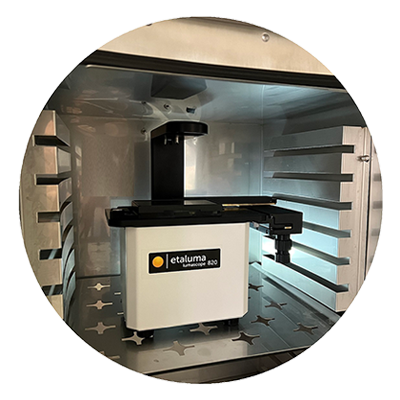
- Compact and robust design enables use inside cell culture hoods, incubators, hypoxic chambers, and on the bench
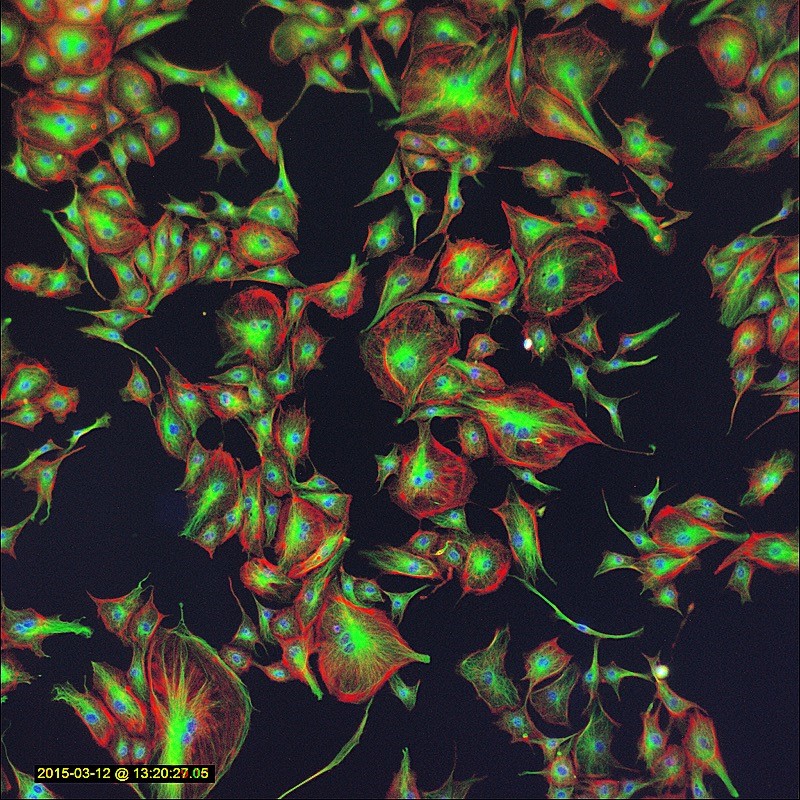
- Detects blue, green and red fluorophores, including common probes such as Hoechst, DAPI, FITC, Fluo-4, GFP, Texas Red & mCherry
- Open source Python control code available
- Objective compatibility with standard lenses
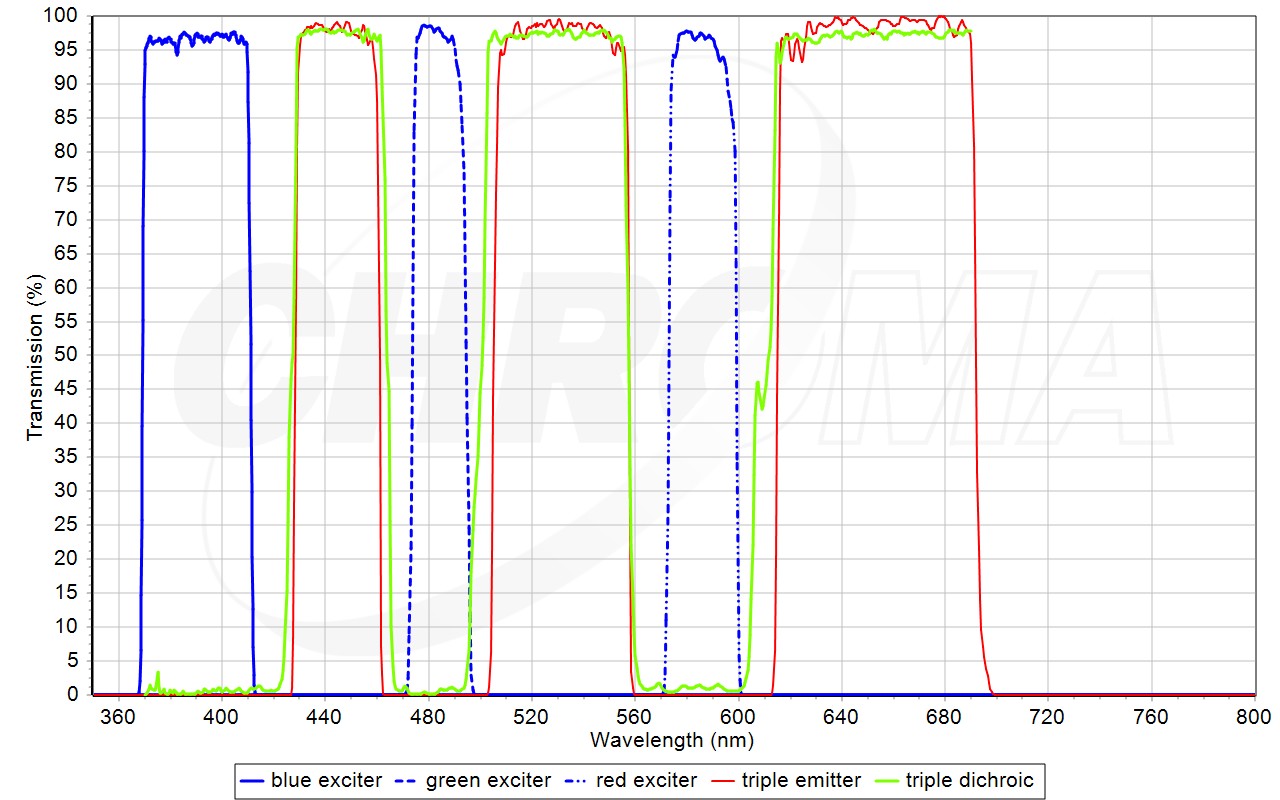
Like all of Etaluma’s microscopes, the LS820 utilizes a Chroma Pinkel filter set optimized for our 405 nm, 488 nm, and 590 nm LED light sources. The 5-filter set is comprised of 3 excitation filters, 1 triple-band dichroic, and 1 triple-band emission filter. The LS820 use a 12 bit monochrome CMOS sensor.
The new LS800 series microscopes are equipped with a low profile, multimodal illuminator that was developed in collaboration with Cairn Research Ltd (based on Aura/Aura Pro™ phase contrast illuminator, based on work by Dr Kevin Webb, Optics & Photonics Research Group, University of Nottingham: Webb, Kevin F. “Condenser‐free contrast methods for transmitted‐light microscopy.” Journal of microscopy 257.1 (2015): 8-22.
Excitation and Emission Profiles of LS820 filters
| LS820 Microscope Specifications | |
|---|---|
| LED Excitation: | 405 nm, 488 nm, and 589 nm |
| Fluorescence Filters: | Blue: Excitation 370-410 nm, Emission 429-462 nm Green: Excitation 473-491 nm, Emission 502-561 nm Red: Excitation 580-598 nm, Emission 612-680 nm |
| Transmitted Modes: | Bright Field, Phase Contrast |
| Objectives: | 1.25x, 2.5x, 4x, 10x, 20x, 40x, 60x, and 100x(oil) |
| Camera: | High Sensitivity Monochrome CMOS BSI Sensor; 5 MP 12-Bit |
| Image Formats: | JPG, BMP, TIF, or PNG |
| Image Size: | Adjustable up to 2100 x 2100 pixels |
| Video Rates: | 25 FPS (exposure limited) |
| Motorized Z: | 14mm travel, 100 nm step, image-based autofocus, Z-stacks |
| Control Software: | LumaviewPro, multi operating system application |
| Computer Requirements: | Windows 10, 11; Core i7, 512TB SSD, 8GB RAM MacOS with M1; 512TB SSD, 8GB RAM |
| Linux Debian Distributions: | 512TB SSD, 8GB RAM |
| Power Requirements: | 80-264 V, 50-60 Hz 10W typical, 40W Max |
| Integration: | Python source under the MIT Open Source License |
| Dimensions: | 24 cm x 22.6 cm x 27.8 cm |
| Weight: | 5 Kg/11 lbs |
| Operating Conditions: | 0°C - 42°C, 5% - 95% RH non-condensing |
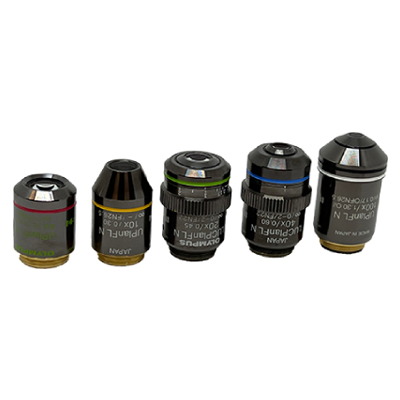
Uses commercial microscope objectives
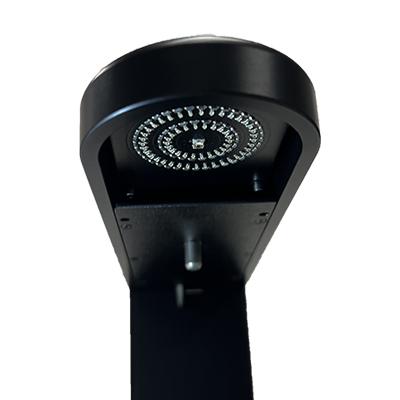
Multi-mode transmitted illumination technology
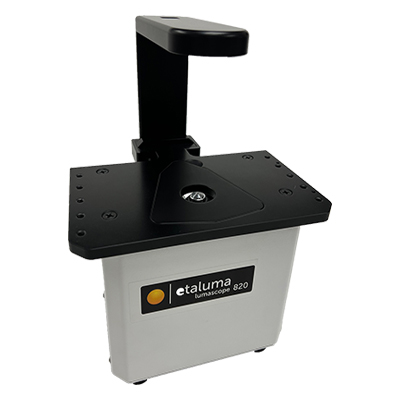
Accommodates almost any sample
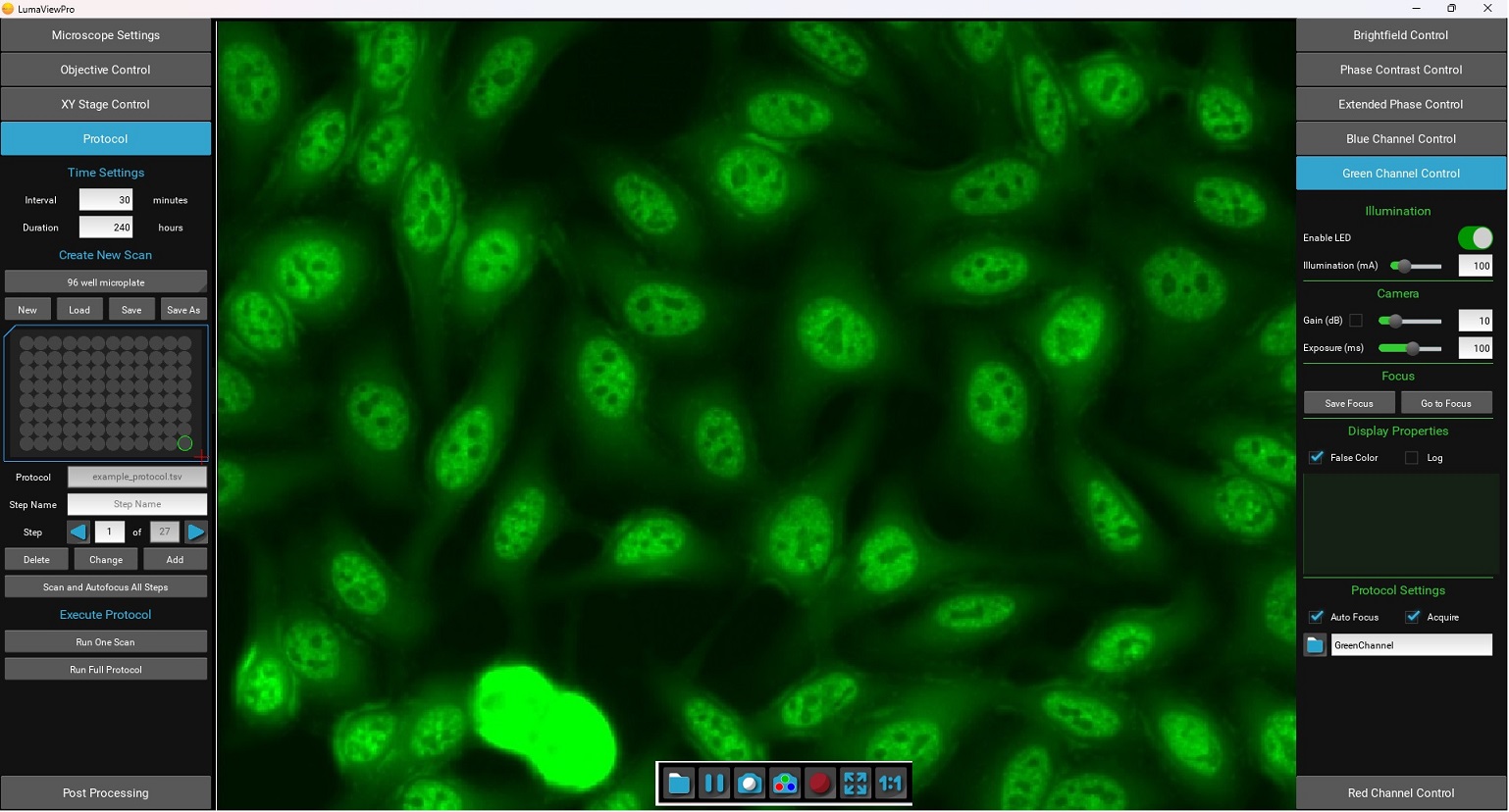
LumaviewPro application runs on
Windows, Mac, and Linux
Copyright © 2024 Etaluma, Inc. All rights reserved.